
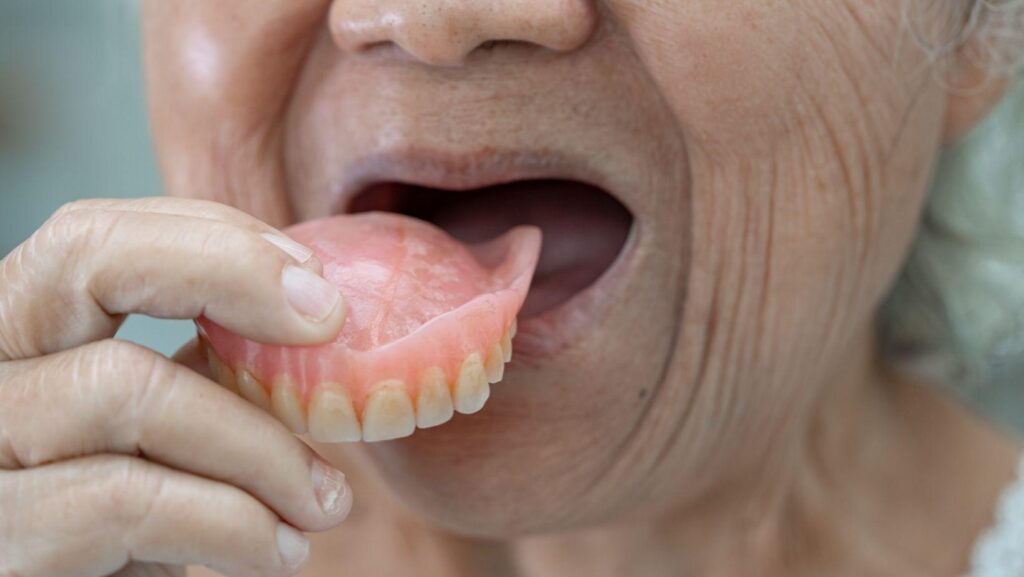
When you lose teeth, your jawbone no longer receives the pressure that helps maintain its strength. Traditional dentures replace visible teeth but rest on your gums, so they cannot provide the same stimulation.
Over time, bone shrinkage can affect your facial structure and make your dentures fit less securely. Some patients address this by choosing snap in denture implants in Plymouth, which anchor into the jawbone rather than resting on the gums alone.
Snap-in dentures use implants anchored in your jaw to provide chewing stimulation, which can help preserve bone around those implants in ways traditional dentures cannot. The implants also give your denture a more stable foundation, helping you chew and speak with greater confidence.
Your bone volume, oral health, medical history, and treatment goals determine whether implant-supported dentures suit you. You will learn how bone loss develops, how implant anchors support the jaw, and which factors may affect your eligibility.
Why Jawbone Shrinks After Tooth Loss
When you lose a tooth, the bone that once supported its root receives less mechanical stimulation. Traditional dentures replace the visible tooth but generally do not recreate the root-level pressure needed to maintain the underlying bone.
The Role Of Tooth Roots In Bone Stimulation
Your tooth roots transmit biting and chewing forces into the jawbone through the periodontal ligament, a thin layer of connective tissue around each root. Cells in the surrounding bone detect these forces and respond by maintaining the bone’s structure and density.
After extraction, that stimulation stops at the empty socket. The body gradually breaks down bone that no longer receives the same functional demand, a process called resorption.
The change often occurs fastest during the first year, especially in the width of the bone, and can continue more slowly over subsequent years. Bone loss varies according to factors such as the extraction site, infection, gum disease, healing, bite forces, and overall health.
As the ridge narrows and lowers, you may have less support for a future implant and less stability for a removable denture.
Why Conventional Dentures Do Not Load The Jawbone
A conventional denture rests on the gums and the soft tissue covering the residual jaw ridge. It can restore appearance and provide useful chewing function, but it does not anchor inside the bone or transmit force through artificial roots in the same way natural teeth do.
Chewing pressure from a denture mainly reaches the surface tissues. Repeated movement and pressure may also irritate the gums, particularly when the ridge has already become narrow or uneven.
As resorption changes the ridge, the denture can loosen, reduce chewing efficiency, and require adjustment or replacement. A conventional denture may slow some functional decline by restoring tooth contact, but it does not reliably prevent post-extraction bone loss.
Snap-in dentures attach to implants placed in the jaw, allowing selected chewing forces to reach the bone and improving retention while helping preserve the supported areas.
How Implant Anchors Preserve Bone
Implant anchors transfer chewing forces into the jawbone, helping reduce the shrinkage that follows tooth loss. The number, placement, and design of the implants affect stability, cleaning needs, comfort, and how much bone receives functional stimulation.
Osseointegration And Functional Force Transfer
During osseointegration, bone grows tightly around each implant and anchors it in place. After healing, the implant can transfer some chewing pressure to the surrounding bone instead of allowing the denture to rest only on the gums.
This stimulation may help maintain bone around the implant, but it does not prevent bone loss everywhere in the jaw. Areas without tooth roots or implants can still resorb, and existing bone loss may limit implant placement.
Your dentist may use imaging to assess bone volume and determine whether grafting or other treatment is necessary. Snap-in dentures also reduce movement during chewing.
Less rocking can decrease gum irritation and improve chewing efficiency. You still need to remove the denture for cleaning and attend regular dental reviews.
Differences Between Snap-In Denture Systems
Snap-in systems differ mainly in their implant number, attachment design, and level of support. A two-implant mandibular denture commonly improves retention while allowing the denture to rotate slightly during function.
A system supported by four or more implants can provide greater stability, depending on your bone anatomy and treatment plan.
|
System feature |
Effect on your treatment |
|
Two implants |
Often improves retention but may provide less support |
|
Four or more implants |
Can offer greater stability and force distribution |
|
Ball or locator attachments |
Allow removable cleaning and component replacement |
|
Fixed implant bridge |
Requires different hygiene methods and cannot be removed by you |
Implants preserve bone most directly where they integrate with the jaw. Your clinician must also monitor attachment wear, implant health, gum tissues, and the fit of the denture.
Proper hygiene and routine maintenance help protect the supporting structures.
Who May Benefit From Implant-Supported Dentures
You may benefit if loose dentures affect chewing, speech, comfort, or daily confidence. Your suitability depends on bone volume, oral health, medical history, treatment goals, and your ability to maintain the implants and denture.
Bone Density And Oral Health Assessment
Your dentist will examine your gums, remaining teeth, jawbone, and bite before recommending implant-supported dentures. X-rays or a 3D scan can show whether enough bone exists to place implants safely.
Traditional dentures do not stimulate the jawbone, so bone gradually shrinks after tooth loss. Implant placement can provide stimulation that helps reduce further bone loss around the implant sites, although it cannot restore bone already lost.
Active gum disease, untreated decay, infections, or poor oral hygiene may need treatment first. Medical conditions and medications that affect healing also require careful review.
If your bone volume is insufficient, your dentist may discuss bone grafting, alternative implant positions, or narrower implants. The lower jaw often gains substantial stability from implant support, while upper-jaw treatment may require different planning because the bone can be less dense.
Treatment Planning And Long-Term Maintenance
Your treatment plan should specify the number and position of implants, the type of attachments, whether the denture will remain removable, and any preliminary procedures.
Snap-in dentures typically attach to implants through locator-style or similar connectors.
You remove the denture for cleaning, while the implants remain in place.
You must clean the denture, attachments, gums, and implant areas every day.
Attend dental reviews so your provider can check bone levels, gum health, fit, and connector wear.
Your dentist may need to replace attachment inserts or adjust the denture as your mouth changes.
Avoid using excessive force to seat the denture, and report pain, swelling, bleeding, looseness, or persistent difficulty chewing promptly.