
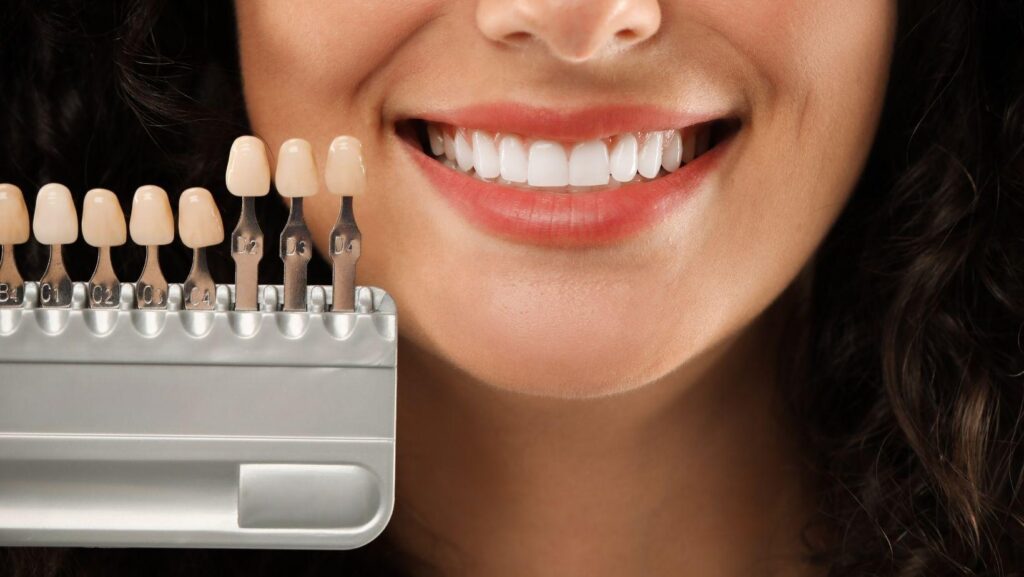
Your facial structure plays a central role in cosmetic dental treatment planning. Dentists assess your facial proportions, midline, lips, gum display, tooth position, and bite to design a smile that suits your features and supports healthy function. This kind of comprehensive facial and dental analysis is a hallmark of working with an experienced cosmetic dentist in Evansville, IN, where treatment planning goes well beyond the teeth themselves.
Your facial structure helps determine the most natural tooth shapes, sizes, alignment, and treatment approach for your smile. These details can influence whether whitening, bonding, veneers, orthodontics, crowns, implants, or a broader smile makeover best fits your goals.
A careful facial and dental analysis connects appearance with function. As you explore smile design and different cosmetic procedures, you will see how your lips, gums, teeth, and facial balance guide realistic treatment choices.
Facial Analysis Foundations
Your facial proportions, symmetry, lip position, and jaw relationships help determine how dental changes will appear in context. Evaluating these features before treatment supports decisions about tooth size, alignment, display, and the need for orthodontic, restorative, or surgical care.
Facial Proportions And Symmetry
Your dentist assesses facial height, width, midline relationships, and the balance between the upper, middle, and lower thirds of your face. These measurements help guide the proposed tooth length, width, shape, and position.
Restorations that appear attractive in isolation may look too dominant if they do not suit your facial width or lower-face height. Your facial midline and dental midline may not align perfectly.
Treatment planning should account for the size and direction of any discrepancy rather than forcing every feature into artificial symmetry. Dentists also evaluate your smile arc, lip movement, tooth display at rest, and the amount of gum shown during smiling.
Because facial movement changes how teeth appear, assessment should include photographs, videos, or an in-person examination when appropriate. Your goals, natural asymmetries, and functional needs remain important alongside measured proportions.
Profile And Skeletal Relationships
A side-view assessment examines your facial profile, lip position, chin projection, and the relationship between your upper and lower jaws. These factors affect how far restorations can extend, how much tooth inclination looks natural, and whether cosmetic treatment alone can address the concern.
If your upper jaw sits forward or your lower jaw sits back, increasing the prominence of the front teeth may produce an unsuitable profile or interfere with lip closure. Conversely, tooth position may need correction before veneers, crowns, or implant restorations can achieve a stable result.
Orthodontic treatment or orthognathic surgery may be relevant when skeletal relationships limit restorative options. Your dentist may combine facial photographs, dental records, radiographs, and cephalometric analysis to evaluate these relationships.
The plan should protect occlusion, speech, lip support, and periodontal health, not just the appearance of the teeth.
Smile Design Considerations
Your facial proportions, tooth dimensions, gum display, and lip movement all influence cosmetic dental planning. Treatment should support your facial features and oral function rather than apply identical tooth shapes or proportions to every patient.
Tooth Shape And Facial Form
Your dentist evaluates tooth shape in relation to your facial outline, width, height, and natural features. Broad facial forms may suit slightly fuller tooth contours, while narrower faces often appear more balanced with slimmer proportions.
These guidelines support planning, but they do not replace an assessment of your existing teeth, bite, gum health, and personal preferences. The visible tooth proportions also matter.
Excessively long veneers can make your smile look crowded or alter speech, while overly short restorations may leave too much gum visible or fail to improve tooth wear. Your dentist may assess the midline, incisal edges, tooth axis, and the relationship between the central incisors and adjacent teeth.
Digital previews, photographs, and temporary restorations can help you assess proposed changes before definitive treatment. Your plan should preserve healthy tooth structure whenever possible.
Tooth reshaping, whitening, orthodontics, bonding, veneers, or crowns may each suit different structural and functional conditions.
Lip Dynamics And Incisor Display
Your lips determine how much of your teeth and gums appears at rest, while speaking and during a full smile. Your dentist may record your relaxed lip position, smile width, upper-lip mobility, lower-lip relationship, and the curvature of your incisal edges.
These observations help establish appropriate tooth length and the visible position of the gum line. If your upper lip rises significantly when you smile, small differences in gum height or tooth length may become noticeable.
If your lips cover much of your teeth at rest, increasing tooth length may have limited visible benefit. Your dentist also considers how restorations interact with the lower lip during speech and smiling, since poorly positioned edges can affect comfort or phonetics.
Treatment planning should account for movement rather than rely only on a static photograph. A recorded smile assessment and trial restorations can show whether the proposed tooth position remains natural across different expressions.
Treatment Planning Across Cosmetic Procedures
Your facial proportions, lip movement, gum display, and bite affect how a cosmetic treatment should be designed. Veneers, bonding, orthodontics, and restorative work must fit both your teeth and the surrounding facial structures to support a balanced appearance and reliable function.
Veneers And Dental Bonding
Veneers and bonding should match the proportions of your face rather than follow a fixed tooth shape. Your dentist may assess facial midline, lip fullness, smile width, tooth visibility at rest, and the amount of gum shown when you smile.
These details help determine tooth length, width, contour, and the position of the incisal edges. Your bite and jaw movement also influence material choice and design.
If you clench, have limited space, or place heavy forces on the front teeth, the dentist may recommend conservative bonding, stronger ceramic materials, or protective measures before treatment. A diagnostic wax-up or temporary mock-up can show how proposed changes affect your smile and facial appearance before permanent treatment.
Orthodontics And Restorative Rehabilitation
Orthodontic treatment can improve tooth position, spacing, midlines, and the angle of the teeth before restorative work. Your dentist and orthodontist may evaluate how tooth movement affects lip support, smile symmetry, gum levels, and the visible proportions of the lower third of your face.
Moving teeth without considering these relationships can create an uneven smile or leave inadequate space for restorations.
For complex rehabilitation, treatment planning should coordinate orthodontics, periodontal care, implants, crowns, and cosmetic procedures. Your bite determines where restorations can be placed and how much force they must withstand.
Digital scans, photographs, radiographs, and facial measurements help the dental team coordinate tooth position, gum contours, occlusal contacts, and final tooth shape. Health, function, maintenance, and your aesthetic preferences should guide the sequence.