
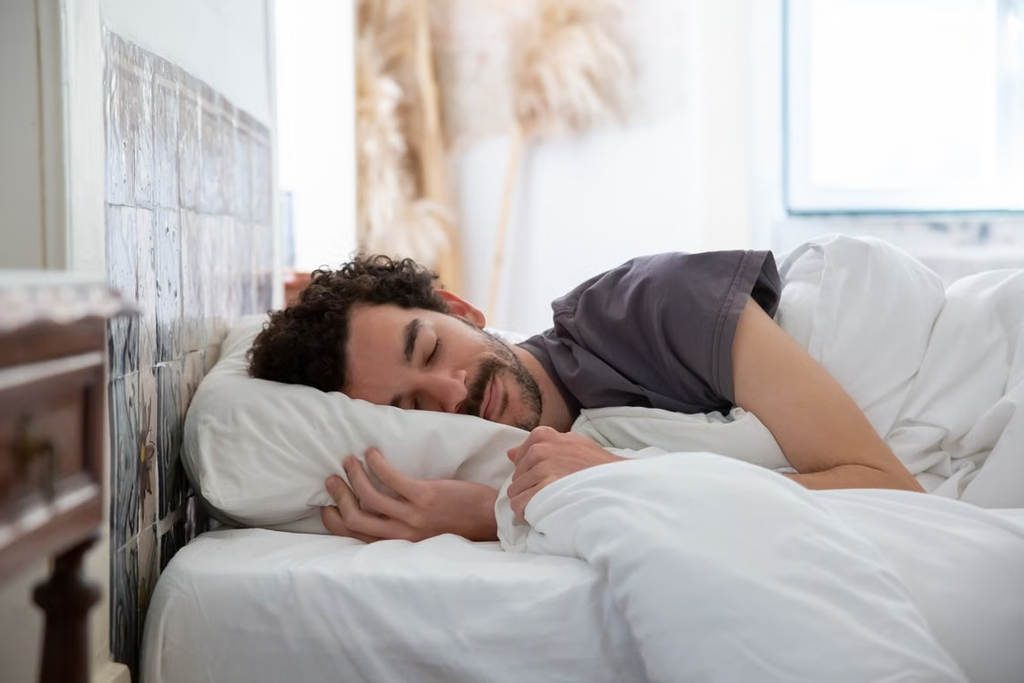
Struggling to get a good night’s sleep?
You’re not alone. Millions lie awake every night staring at the ceiling. And increasingly they’re turning to cannabis to help them switch off.
Here’s how big: A survey by the National Sleep Foundation found that an estimated 22 million adults in the US already use some cannabis product as a sleep aid.
But here’s the question:
Does it actually work? Or does it just feel like it works?
Let’s look at what the latest research really shows…
Inside This Guide:
- Why People Reach For Cannabis At Night
- How People Use Cannabis Before Bed
- What The Science Says About THC, CBN & CBD
- The Hidden Catch With Long-Term Use
- 5 Simple Habits For Better Rest
Why People Reach For Cannabis At Night
Insomnia is widespread. Anxiety, technology, staying up late and overactive minds contribute.
Sleeping pills often cause people to feel groggy the following day. Therefore, it’s understandable that people are looking for something more natural.
This is especially common among younger people. Research from the University of Michigan, published in JAMA Pediatrics, reported that 18% of young adults between the ages of 19 and 30 use cannabis to fall asleep.
That’s almost 1 in 5.
Here’s the thing though…
Just because something is popular doesn’t mean it’s been proven. Know what the research shows before you make up your mind.
How People Use Cannabis Before Bed
There’s no single way to use cannabis for sleep. The most common options are:
- Smoking flower
- Edibles and capsules
- Vape cartridges
They each work in different ways. Edibles can take a while to kick in but last for hours. Smoking/vaping works in minutes but doesn’t last as long.
Vaping before bed has become pretty common since it’s fast, silent and gives you complete control. Many consumers are moving to larger 2g carts so they won’t have to refill as often. But using a larger cart requires a compatible 2g cartridge battery. An underpowered or cheap battery will heat sporadically, cause clogs, or die midweek. If you’re looking for options, Cartisan vapes offer 2g cartridge batteries designed to accommodate larger carts and provide consistent, customizable temperature controls.
Why does this matter for sleep?
Constant heat equals a constant experience. And when relaxing, you don’t want any surprises.
What The Science Says About THC, CBN & CBD
This is where things get interesting.
Cannabis contains many compounds, not all of which may impact sleep similarly. Studies have begun isolating these compounds one at a time, and the bigger picture is beginning to emerge.
THC
THC is the main compound that causes the “high.”
It might help you fall asleep quicker. Research compiled in a 2025 review published in Sleep Medicine Reviews found evidence that cannabis products high in THC or CBN improved sleep quality compared to a placebo.
That’s a solid start.
CBN
CBN is known as the “sleepy” compound. It’s created naturally from aging THC.
Some initial studies on animals showed promise. CBN raised deep sleep and REM sleep in rats, without getting them high.
However, results on human sleep are less clear. A recent study out of the Woolcock Institute in Sydney didn’t find CBN helped the study’s primary sleep outcome. Participants did feel as though they had better sleep, however.
CBD
Here’s the surprise…
CBD products are marketed as the ultimate sleep aid. However, that same 2025 review concluded CBD alone wasn’t effective at improving sleep.
CBD might help promote relaxation because it could reduce anxiety. However, evidence of CBD improving sleep alone is lacking.
So what does this mean for you?
If it says it’ll knock you out, read the label. Ingredient synergy matters MUCH more than advertising hype. If something is marketed as a “sleep” aid but only has CBD in it, it probably won’t perform as advertised.
The Hidden Catch With Long-Term Use
Now for the part that most people skip.
Marijuana might help you fall asleep. But staying asleep and achieving restful sleep is another matter entirely.
Authors of the Michigan study cautioned against using cannabis as a sleep aid. Long-term, sleep may actually suffer because cannabis interferes with restorative sleep.
Then there’s tolerance.
The frequent use of cannabis leads to tolerance. The higher your tolerance, the more cannabis it takes to get the same effect.
And when do they stop? They often deal with:
- Trouble falling asleep
- Vivid or strange dreams
- Waking up during the night
That’s why sleep experts warn against it. In fact, the National Sleep Foundation has advised people to temper their expectations until more definitive information is available.
5 Simple Habits For Better Rest
Here’s the good news…
Whether you smoke weed or not, sleep hygiene tips will always be most important. These tips are all free and work for nearly everyone:
- Stick to a regular bedtime: Go to bed and wake up at the same time every day (including weekends!).
- Cut the screens: Put your phone away at least 30 minutes before bed.
- Keep your room cool and dark: A cool, quiet room helps your body relax.
- Watch the caffeine: Avoid coffee and energy drinks in the afternoon.
- Get morning light: A few minutes of sun early in the day helps set your body clock.
You can consider these your basics. If you don’t follow these, nothing else will run smoothly.
It really is that simple.
Putting It All To Bed
Cannabis and sleep has been one of the most talked about health topics as of late. Research is finally starting to catch up.
To quickly recap:
- Millions of people use cannabis to help them sleep
- THC and CBN show the most promise in recent studies
- CBD alone doesn’t seem to do much for sleep
- Long-term use can hurt sleep quality and build tolerance
Marijuana can help some folks fall asleep.
If you decide that you want to use cannabis, use it sparingly, invest in good products (e.g. a trustworthy 2g cartridge battery) and remember to make healthy sleep patterns a priority. Your body (and mornings) will thank you.