
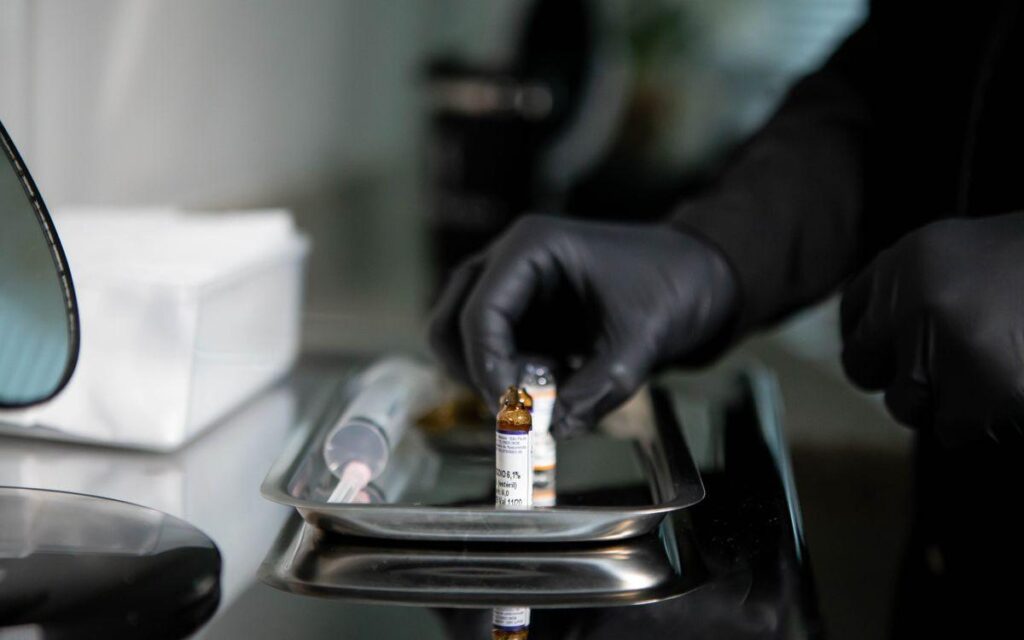
Many of the medicines people rely on every day – insulin, many vaccines, eye drops, certain antibiotics and most modern biologic drugs – are sensitive to temperature. If they get too warm, or in some cases accidentally freeze, they can lose effectiveness without any visible sign. The vial looks the same, but the medicine inside may no longer work as intended.
Protecting those products starts long before they reach a pharmacy shelf. During manufacturing and storage, temperature-sensitive ingredients and finished products are kept in controlled environments built to Good Manufacturing Practice (GMP) rules. A typical example is a GMP coldroom: a temperature-controlled storage room designed so that every corner stays within its set range, with continuous monitoring and documentation that inspectors can review.
What GMP actually requires
GMP is the set of quality rules that medicine manufacturers must follow, enforced by authorities such as the European Medicines Agency and the US Food and Drug Administration. For cold storage, the principle is simple: a company must be able to prove, not just claim, that its products were kept within the correct temperature range at all times.
In practice, that proof rests on a few building blocks:
- Qualification: before a cold room is used, it goes through documented testing, often described as installation, operational and performance qualification. Each stage confirms that the room was installed correctly, works as designed and performs reliably when loaded.
- Temperature mapping: sensors are placed throughout the empty and the loaded room to find warm and cold spots, for example near the door or close to the cooling units.
- Continuous monitoring: calibrated sensors record temperatures around the clock and trigger alarms if readings drift outside limits.
- Audit trails: every alarm, change of setting and intervention is logged so the history cannot be quietly altered.
Why a room is not just a big fridge
A household refrigerator cycles on and off, and its temperature varies considerably from shelf to shelf. That is acceptable for food, but not for a pallet of vaccines worth a great deal of money and, more importantly, intended for patients.
Pharmaceutical cold rooms are engineered differently. Air distribution is designed so cold air reaches the whole load, not only the area closest to the evaporator. Doors, insulation and ante-rooms limit how much warm air enters when staff move goods in and out. Refrigeration is often duplicated, so if one system fails, another can maintain temperature while technicians repair the fault. Surfaces are made to be easy to clean, because hygiene matters as much as temperature in a GMP facility.
When something does go wrong – a door left ajar, a power cut, a failing compressor – the monitoring data become essential. Quality staff assess how long the products were outside their range and how far. Manufacturers hold stability data showing how their medicines tolerate short excursions, and that evidence decides whether a batch can still be released or must be discarded.
The chain continues after the factory
The same thinking, often called the cold chain, follows the medicine through wholesalers, transport and pharmacies. Insulated packaging, temperature loggers in shipments and refrigerated storage at the pharmacy all serve the same purpose: an unbroken record showing the product stayed where it should.
The final link is in the patient’s own home, and that is where a few simple habits help:
- Read the label or leaflet. Many refrigerated medicines should be stored between 2 °C and 8 °C, but some may be kept at room temperature for a limited period once opened.
- Avoid the back of the fridge and the freezer compartment, where products can freeze by accident.
- Do not leave medicines in a car, on a windowsill or near a radiator.
- When travelling, use an insulated bag and ask your pharmacist how long the product can be out of the fridge.
- If a medicine has frozen or been exposed to heat, ask your pharmacist before using it rather than guessing.
Most people never see the rooms, sensors and paperwork that keep their medicines in good condition. Knowing they exist makes it easier to understand why the storage advice on a package matters – and why the last few days in a kitchen fridge deserve the same care as the months before.